August 26, 2025 09:00 AM PST
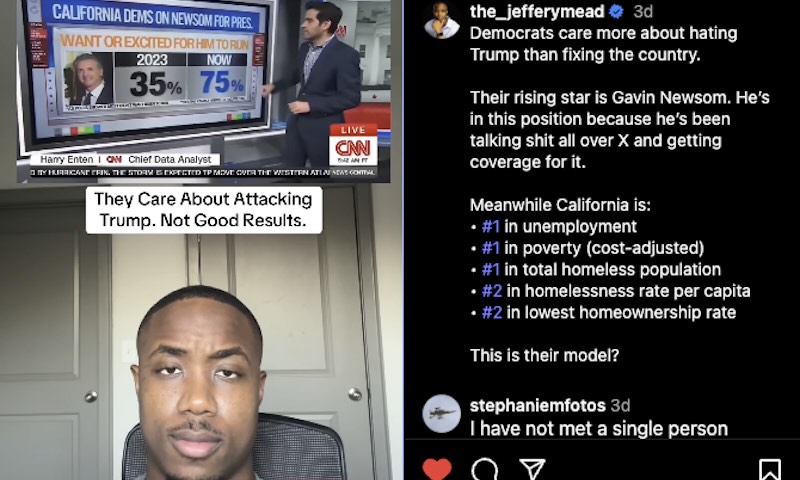
(PenniesToSave.com) – Governor Gavin Newsom’s approval among California Democrats for a possible presidential run has surged by 40 points since 2023. Yet this climb in popularity comes against a backdrop of sobering economic challenges in the state, including rising unemployment, worsening poverty, and escalating homelessness. What does this paradox reveal about political priorities, both in California and across the nation?
Quick Links
- Why Is Newsom’s Popularity Climbing Despite California’s Challenges?
- What Do California’s Economic Numbers Really Show?
- How Do Housing and Homelessness Shape the Debate?
- Is Fighting Trump Enough to Justify Political Momentum?
- What Lessons Can Be Drawn for the Rest of the Country?
Why Is Newsom’s Popularity Climbing Despite California’s Challenges?
Newsom’s rising approval, driven in part by his confrontational style on social media, seems to hinge more on political posture than on policy performance. Many supporters appear energized by his rhetorical battles with Trump, elevating charisma above tangible results. California Democrats are increasingly vocal in supporting a potential presidential run, even as the state faces a number of ongoing struggles.
California’s unemployment rate was 5.5 percent in July 2025, the highest of any state in the nation. The rate has been climbing steadily, pushed upward by technology sector layoffs, slower job growth, and cost-of-living pressures. These realities suggest that popularity is not necessarily tied to the health of the state’s economy but rather to how a leader is perceived nationally.
This dynamic raises concerns about how voters interpret leadership. In this case, energy and rhetoric have overshadowed evidence of economic decline. The question for the broader electorate is whether this approach reflects a deeper shift in what Americans now prioritize when evaluating political figures.
What Do California’s Economic Numbers Really Show?
California continues to struggle in fundamental economic areas that affect millions of residents. In July 2025, the state’s unemployment rate was the highest in the United States at 5.5 percent. Analysts point to ongoing layoffs in Silicon Valley, slowing job creation in service industries, and broader economic shifts that are straining middle- and lower-income households. These challenges have long-term consequences for families already balancing high housing and living costs.
The poverty picture is equally concerning. Using the Supplemental Poverty Measure, which accounts for cost of living, California again ranks first in the nation. Between 15 and 20 percent of Californians fall under this category, making the state one of the hardest places for working-class families to make ends meet. By contrast, official poverty rates often paint a rosier picture, but those statistics fail to reflect the crushing impact of housing costs in cities like Los Angeles and San Francisco.
The data highlights a reality that contrasts with the optimism shown by Newsom’s supporters. While he is seen as a rising national figure, the people in his state face financial pressures that reveal deeper cracks in California’s economic foundation.
How Do Housing and Homelessness Shape the Debate?
Housing challenges play a central role in California’s struggles. The state leads the nation in total homelessness, with nearly one-third of all homeless individuals in the United States living there. California also ranks second in homelessness per capita, meaning the issue is not simply a byproduct of size but a sign of deep systemic problems. These numbers reflect both shortages in affordable housing and growing economic inequality.
Homeownership tells a similar story. California has one of the lowest homeownership rates in the country, ranking near the bottom nationally. For many families, buying a home has become virtually unattainable, with median home prices far exceeding the national average. High property values, restrictive zoning, and slow housing construction combine to limit opportunities for upward mobility.
The combination of homelessness and declining homeownership makes California’s housing crisis a defining issue for residents. When supporters push Newsom as a future national leader, the question becomes unavoidable: should leadership be judged by charisma and political combat, or by the quality of life delivered to those living under it?
Is Fighting Trump Enough to Justify Political Momentum?
There is little doubt that Newsom’s clashes with Trump on X have amplified his national profile. Among Democratic voters, his sharp rebuttals and aggressive tone are often celebrated. In some ways, his rise mirrors the broader trend in modern politics, where visibility and soundbites can overshadow traditional measures of competence.
This raises a critical question about the standards voters apply to leadership. Should a candidate’s strength be measured by their ability to dominate public debates, or by their record in managing complex social and economic problems? Newsom’s momentum suggests the former is taking precedence, but California’s struggles provide a counterpoint that cannot be ignored.
Political theater can energize a base and even alter national narratives. Yet without real-world improvements, particularly in the lives of everyday people, such momentum may prove fleeting. Leadership defined by spectacle risks setting a dangerous precedent for the way voters across the country measure success.
What Lessons Can Be Drawn for the Rest of the Country?
California’s challenges carry lessons for the broader United States. The state has long been seen as a bellwether, both culturally and politically. If voters reward a leader primarily for their combative social media presence rather than for measurable progress in solving economic and social issues, other states may follow the same path. This trend could lead to a political culture that values performance over policy.
Other states also face economic headwinds, from rising housing costs to stubborn poverty rates. California’s experience demonstrates how quickly these problems can grow if left unaddressed. The lesson for national politics is clear: leadership needs to focus on practical solutions that deliver lasting improvements, not just rhetorical victories.
By closely examining California, Americans can reflect on what they value in their leaders. Do they prioritize style or substance? The answer to this question will shape not just California’s future but the direction of the nation as a whole.
Final Thoughts
Governor Newsom’s surge in popularity among Democrats reveals a paradox at the heart of modern politics. He presides over a state grappling with high unemployment, record poverty levels, and a worsening housing crisis, yet his star continues to rise. The explanation lies not in results but in rhetoric, as voters respond more strongly to combative energy than to measurable outcomes.
For Americans across the country, this raises an important point of reflection. Political leadership should be defined by results that improve lives, not by the ability to dominate headlines. If the focus continues to drift toward spectacle rather than substance, voters may find themselves endorsing leaders whose record falls far short of the promises.
Works Cited
Bernick, Michael. Employment Development Department Press Release: California Added 15,000 Jobs in July — Unemployment Rate Rises to 5.5 Percent. EDD, 15 Aug. 2025, edd.ca.gov/en/about_edd/news_releases_and_announcements/unemployment-july-2025.
Burns, Kalee. Supplemental Poverty Measure States. U.S. Census Bureau, 10 Sept. 2024, www.census.gov/library/stories/2024/09/supplemental-poverty-measure-states.html.
Cal Matters. California Again Tops Every Other State When It Comes to Poverty — Supplemental Poverty Measure at 15.4% Over Three Years. CalMatters, 11 Sept. 2024, calmatters.org/commentary/2024/09/california-again-top-state-poverty/.
Cal Budget Center. California’s Poverty Rate Soars to Alarmingly High Levels in 2023, 18.9%. California Budget & Policy Center, 2023, calbudgetcenter.org/resources/californias-poverty-rate-soars-to-alarmingly-high-levels-in-2023/.
U.S. Bureau of Labor Statistics. Local Area Unemployment Statistics: California, July 2025. Bureau of Labor Statistics, 15 Aug. 2025, https://www.bls.gov/eag/eag.ca.htm.